What recycled glass worktop overlays are, when they make sense, and when a full thickness surface wins, from kitchen designers in Edinburgh and Glasgow.
Two products share the name “recycled glass worktop”. One is a solid slab. The other is a skin. The difference decides almost everything else.
Since we published our guide to recycled glass worktops, a steady stream of readers has arrived searching for something slightly different: recycled glass worktop overlays. It is a fair question, and most of what is written about it comes from companies with something to sell you.
We only fit one of the two products, so we will declare that interest up front and then play it straight. Here is what an overlay actually is, when it genuinely makes sense, and when a full thickness surface is the better answer.
What Is a Worktop Overlay?
A worktop overlay is a thin, made-to-measure layer of engineered surface, typically only a few millimetres thick, bonded directly on top of your existing worktop. The old surface stays where it is; the overlay becomes the new face of it. Some overlay systems use a composite containing crushed recycled glass, which is how the two products came to share a name.
The pitch is disruption, or rather the lack of it. Because nothing is ripped out, an overlay is usually measured, made and fitted quickly, with the kitchen staying usable throughout. For the right kitchen, that is a real advantage rather than a gimmick.
The product we fit is different: a full thickness slab of recycled glass surface, templated from your actual cabinetry, cut for your hob and sink, and fitted as the crowning layer of a kitchen designed as a whole. If you want the deeper story of how the material itself is made, our recycled glass guide covers it.
The Differences That Matter
Set the marketing aside and the two products separate on a few practical points:
- What is underneath. An overlay is only as good as the worktop it is glued to. The existing surface needs to be sound, level and well fixed, and it stays part of your kitchen, with the overlay’s lifespan tied to it.
- Edges. A slab has one material all the way through, so the edge you see and touch is the worktop itself. An overlay builds its edge from strips of the same skin, wrapped and bonded around the old worktop’s profile.
- Height. An overlay adds its thickness on top of what is already there. A few millimetres sounds like nothing until it meets upstands, socket heights, appliance clearances and window sills.
- Sinks and details. Undermounted sinks, drainer grooves and shaped edge profiles are fabrication work in a solid slab. Overlay systems have their own answers, but the options narrow.
- Layout. This is the big one. An overlay resurfaces the kitchen you already have, exactly as it is. A templated slab is made for the kitchen you are about to have, which matters the moment you want to move a hob, add an island or change the run.
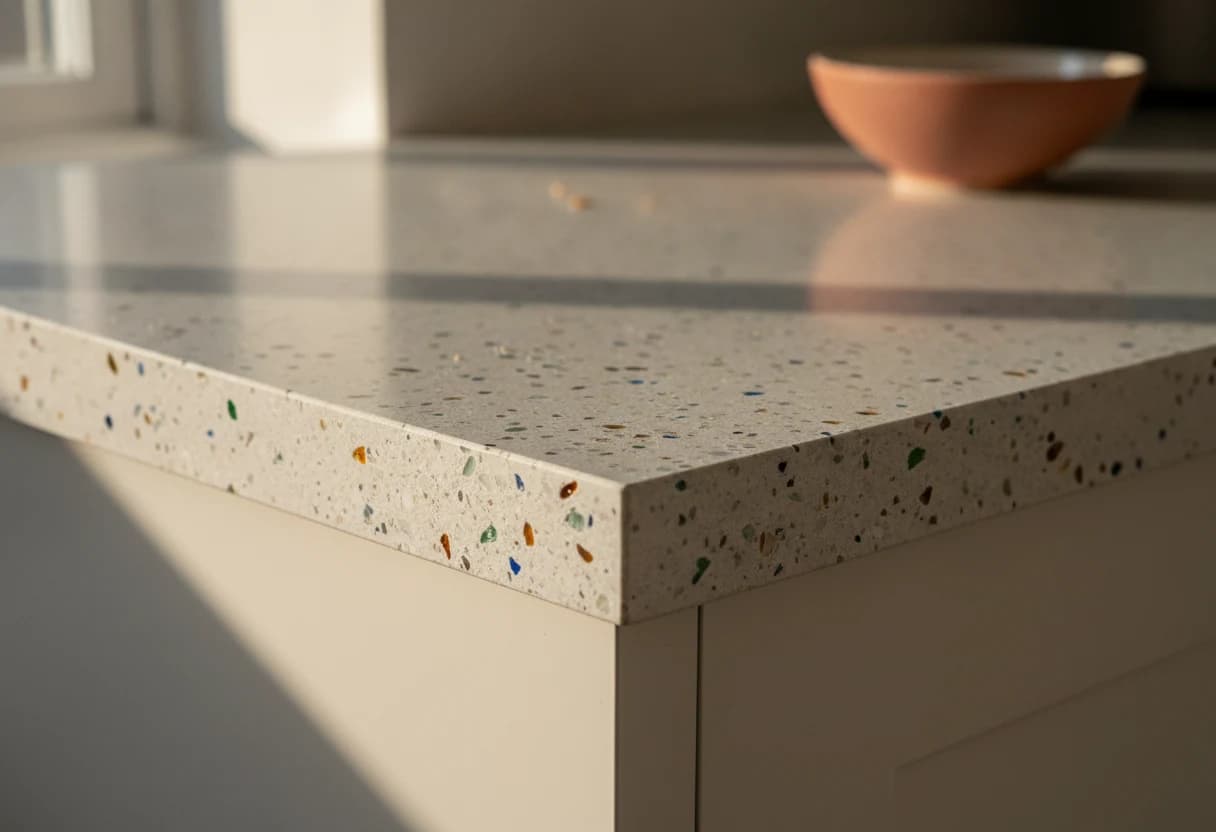
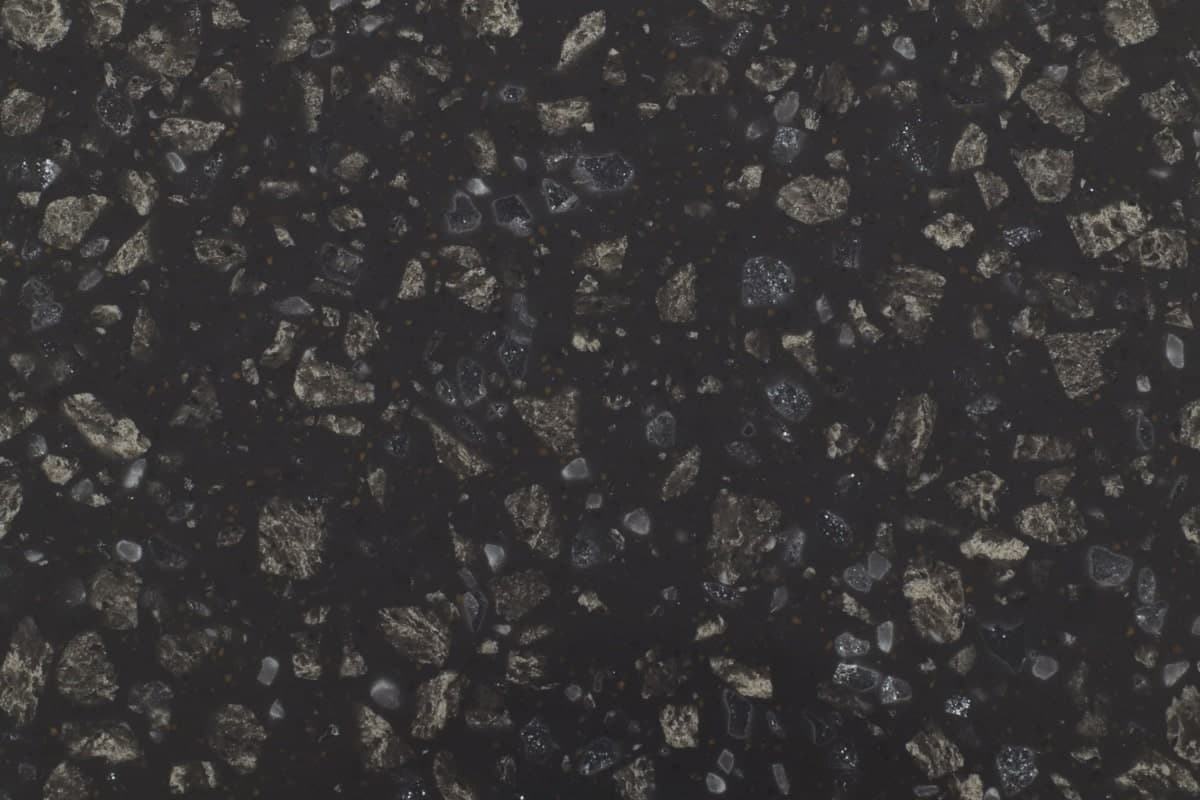 Full thickness means the speckle you see on top runs right through the slab, edge included.
When an Overlay Genuinely Makes Sense
Honesty cuts both ways, so here it is: if you love your current layout, your cabinetry is solid and square, and what you want is a fresher surface rather than a different kitchen, an overlay from a reputable specialist is a reasonable route. It is quicker and less disruptive than replacing worktops, and for some households that convenience is the whole decision.
We do not fit overlays, and we are not going to invent reasons why nobody should buy one. The product exists because it solves a real, narrow problem well.
Why the Kitchens We Design Get Full Thickness Slabs
Our clients almost never arrive wanting only a new surface. They arrive wanting a kitchen that works differently: a better layout, an island that earns its floor space, storage that fits how they actually cook. Once the design changes, there is no existing worktop to resurface, and the overlay question answers itself.
A full thickness slab also carries the qualities people choose recycled glass for in the first place. The depth and sparkle of the finishes in our range come from thousands of glass facets held in the body of the material, not printed on its face. Chips can be repaired by working the same material, edges are the genuine article, and nothing about the worktop depends on the surface that came before it.
What About Cost?
Overlay companies compete on price and speed, and we will not pretend to quote a product we do not supply; the honest answer is to get a real quotation from a specialist and judge it against what it buys you.
What we can tell you is how the full kitchen sums work. Most of our kitchens land between £10,000 and £30,000+ depending on size and specification, with the worktop treated as one lever in that budget rather than an afterthought. Our honest kitchen cost guide sets out where the money actually goes, with no teaser figures.
See Both Ideas in Person
Surfaces are tactile decisions. If you are weighing an overlay against a full replacement anywhere in Edinburgh or Glasgow, start with a video call and tell us what you are trying to fix about your kitchen. If the honest answer is a resurfacing job, we will say so and wish you well. If it is a kitchen worth redesigning, we will bring recycled glass samples to the conversation and you can see what full thickness looks like up close.
Get in touch
Weighing Up Worktops? Talk It Through First
Book a free design consultation and we’ll talk honestly about the right surface for your kitchen, overlay questions included. Our designers work with clients across Edinburgh and Glasgow, and nobody will pressure you toward the answer that suits us.