What recycled glass worktops are made of, how the slabs are produced, and what moves the price, from kitchen designers in Glasgow.
Of every surface in our worktop range, recycled glass is the one that makes people pause mid-conversation and ask what they’re looking at.
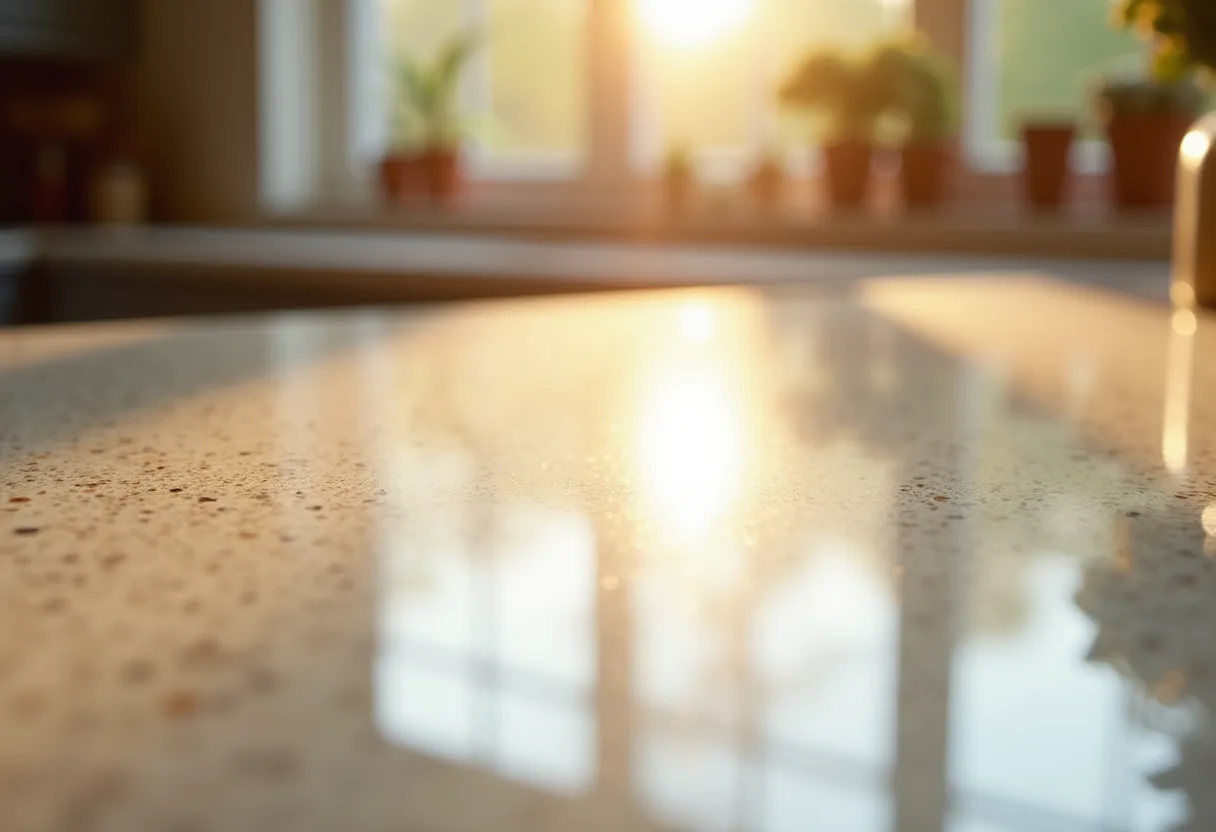
It has good reason to. A recycled glass worktop takes bottles and glazing that would otherwise be waste and turns them into a surface with real depth: thousands of tiny facets that catch the light differently at every hour of the day. Our Glasgow clients tend to fall for it in person, then ask the same two questions: how is it actually made, and what does it cost?
Here are honest answers to both.
What Is a Recycled Glass Worktop?
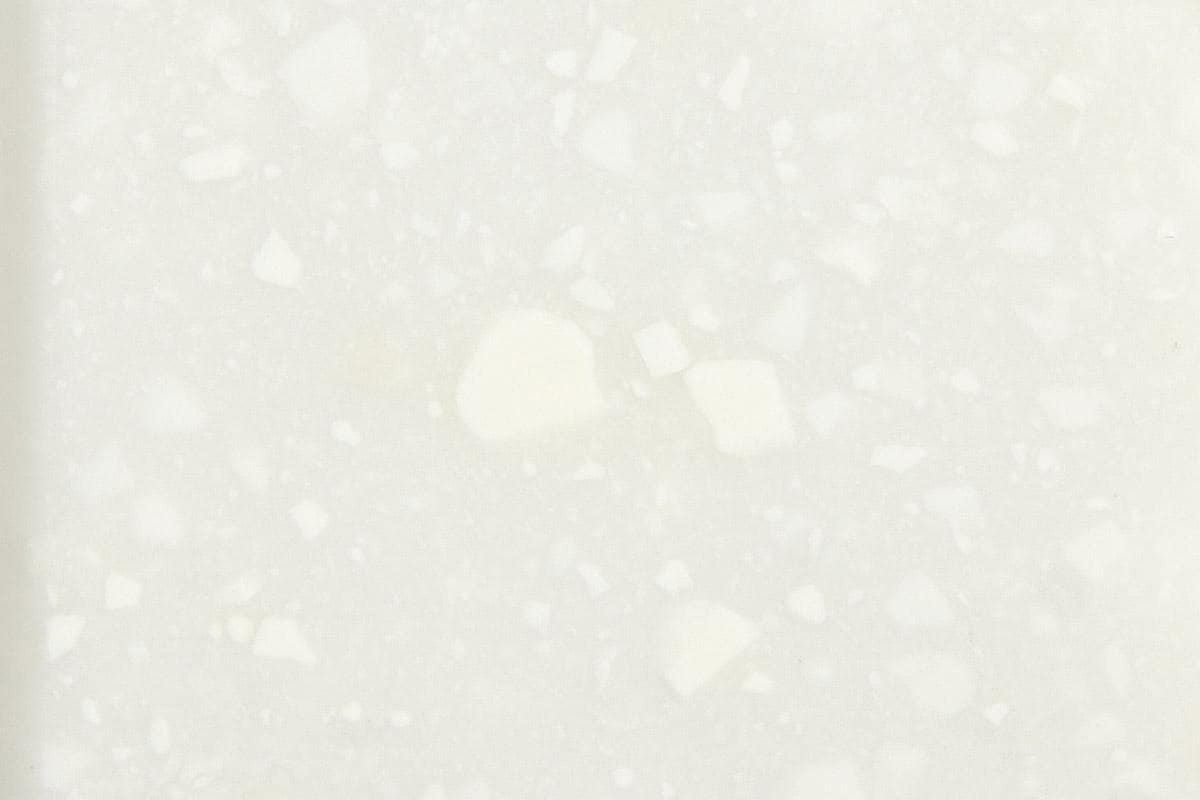 Ice: a white marble-effect finish from our recycled glass range.
A recycled glass worktop is a solid, engineered surface in which crushed glass makes up much of the body of the slab. Depending on the finish, the glass reads as a fine speckle, a bold fleck, or almost disappears into a marble-style veining.
The nearest familiar comparison is terrazzo. Like terrazzo, every slab has character in the aggregate itself rather than in a printed pattern, so the surface rewards a second look. Unlike natural stone, the raw material has already lived one life as bottles, jars and window glass.
One near-namesake is worth separating out: the recycled glass worktop overlay, a thin skin bonded over your existing surface rather than a solid slab. It is a different product from the full thickness worktops we fabricate, and we compare the two honestly further down if that is the choice you are weighing up.
How Recycled Glass Worktops Are Made
The manufacturing process is closer to quartz worktops than to solid timber or laminate:
- Crushing and grading. Collected glass is cleaned and crushed into chips, then graded by size. Coarse chips give the classic sparkle; fine grades give a softer, more uniform surface.
- Binding. The glass is mixed with a resin binder and pigments. The binder locks the chips together and gives the slab its strength and water resistance.
- Casting and curing. The mix is formed into slabs under pressure and cured until solid.
- Polishing. Each slab is ground flat and polished to the finished sheen.
From there it behaves like any premium solid surface in our workshop process: your worktop is templated from your actual cabinetry, cut to your layout with the cutouts for hob and sink, and fitted by people who do this every week.
Finishes: From Quiet Speckle to Marble Veining
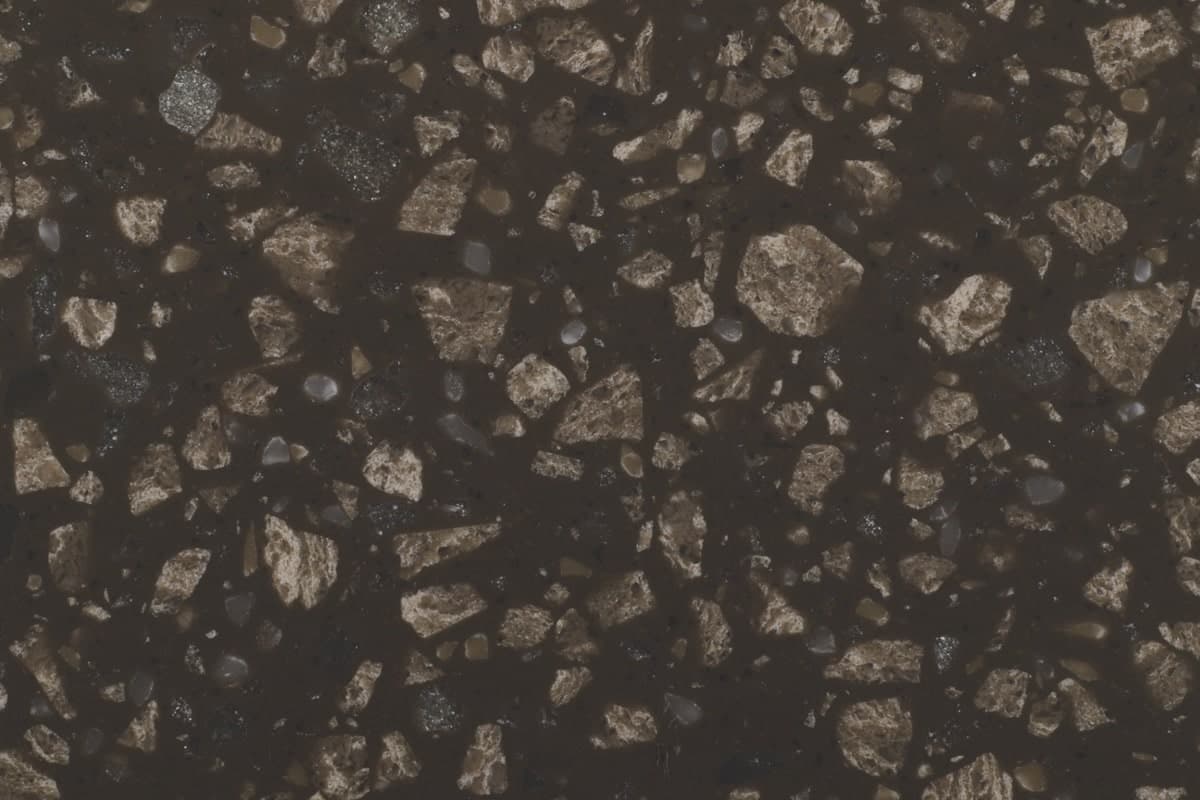 Bark: black with gold flecks, for kitchens that can carry drama.
Recycled glass doesn’t commit you to one look. Within our worktop range the finishes run from restrained to theatrical:
- Stratum: a grey speckled surface that sits comfortably in modern schemes
- Saratoga: warm beige with subtle flecks, a natural partner for timber and shaker doors
- Bark: black with gold flecks, made for moody, dramatic kitchens
- Ice: white with soft veining, if you want the material without the sparkle turned up
A speckled finish pairs especially well with plain handleless cabinetry, where an uninterrupted door run lets the worktop do the talking.
Living With One
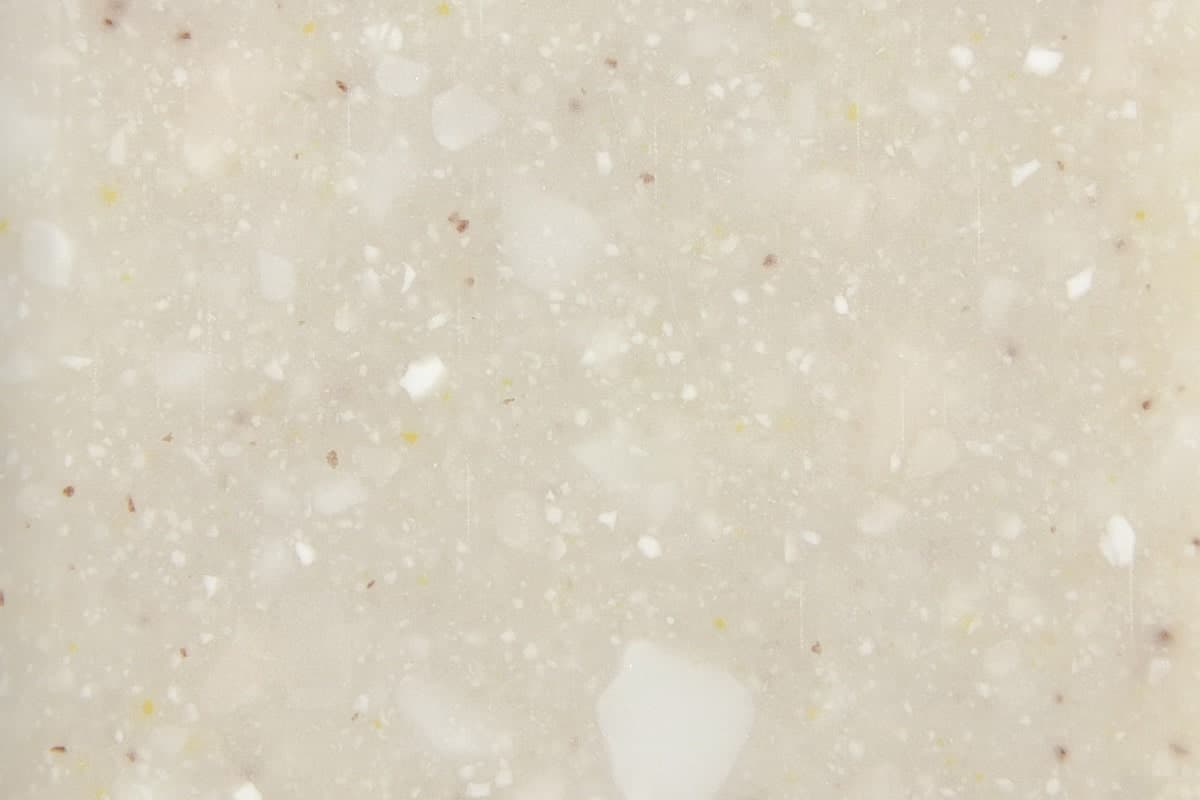 Saratoga: warm beige flecks that soften the material for classic schemes.
Day to day, treat a recycled glass worktop the way you would treat quartz: chopping boards for knives, trivets for hot pans, and a wipe-down with soapy water for everything else. The glassy surface doesn’t hang on to spills, which is part of why the material suits busy family kitchens as well as showpiece ones.
The honest caveat is the same one we give for every engineered surface: it is very hard-wearing, not indestructible. Good habits keep it looking new for a long time.
Overlays vs Full Thickness Slabs
Two products share the name “recycled glass worktop”. One is a solid slab. The other is a skin, and the difference decides almost everything else.
A worktop overlay is a thin layer of engineered surface, typically only a few millimetres thick, bonded on top of your existing worktop. Some overlay systems use a composite containing crushed recycled glass, which is how the two came to share a name. Nothing is ripped out, so an overlay is usually fitted quickly and the kitchen stays usable throughout.
We only supply the full thickness slab, so we will declare that interest up front. Here are the differences that matter:
- What is underneath. An overlay is only as good as the worktop it is glued to, and its lifespan is tied to that old surface.
- Edges. A slab is one material all the way through, so the edge is the worktop itself. An overlay builds its edge from strips of the same skin, wrapped around the old profile.
- Layout. An overlay resurfaces the kitchen you already have, exactly as it is. A templated slab is made for the kitchen you are about to have, which matters the moment you want to move a hob, add an island or change the run.
If you love your current layout, your cabinetry is solid and you want a fresher surface rather than a different kitchen, an overlay from a reputable specialist is a reasonable route, and we will not invent reasons otherwise. Our clients almost always arrive wanting a kitchen that works differently, though, and once the design changes there is no old worktop left to cover.
What Drives the Cost
Nobody enjoys a price page that says “it depends”, so here is what it actually depends on:
- The finish you choose. Decors within the same material can sit at different price points.
- How much worktop you need. Long runs, islands and full-height splashbacks all add material.
- Cutouts and detailing. Hob and sink cutouts, drainer grooves and edge profiles all add fabrication time.
- Templating and fitting. A precise template and experienced fitting are part of the price, and worth it. A worktop is the least forgiving element in a kitchen to get wrong.
Because we design the whole kitchen, we treat the worktop as one lever in the overall budget rather than quoting it in isolation. Most of our full kitchens land between £10,000 and £30,000+, and within that a designer can usually find room for the surface you actually want by balancing the specification elsewhere. Our honest kitchen cost guide breaks down where that money goes.
If you want a real number rather than a range, that’s exactly what the free design consultation is for.
The Sustainability Point, Without the Greenwash
Recycled glass worktops give waste glass a second, much longer life as a solid surface. That is a genuinely better story than quarrying new stone, and it matters to many of the people who choose the material.
We’d rather understate this than oversell it: the binder is a resin, the slabs still have to be manufactured and transported, and no worktop is impact-free. If sustainability is a priority for your kitchen, tell your designer at the start: material choice is one decision among several, from carcase construction to appliance efficiency, where it can shape the design.
Worth Seeing in Person
Photographs flatten this material. The sparkle, the depth and the way the surface shifts with the light are exactly the qualities a screen can’t carry, which is why we’ll always encourage you to see and touch a sample before you decide.
Start with a video call, tell us what you’re planning, and we’ll bring the right samples to the design conversation.
Get in touch
See Recycled Glass in Your Own Kitchen Design
Book a free design consultation and we’ll plan your kitchen around the surfaces you love. Our designers work with clients across Glasgow and central Scotland, and can talk you through every finish in our recycled glass range before you commit to anything.