Will a kitchen island work in your Edinburgh home? The clearances, minimum sizes and seating that make one fit, and when a peninsula is the smarter call.
Kitchen islands are one of the features our Glasgow and Edinburgh clients request most, and for good reason. Done right, they bring style, practicality, and flow to the heart of your home.
But is an island realistic in your space?
The good news: with smart design, even modest kitchens can enjoy the benefits of an island, or a clever alternative. Here’s what to consider.
Why Islands Work in All Shapes and Sizes
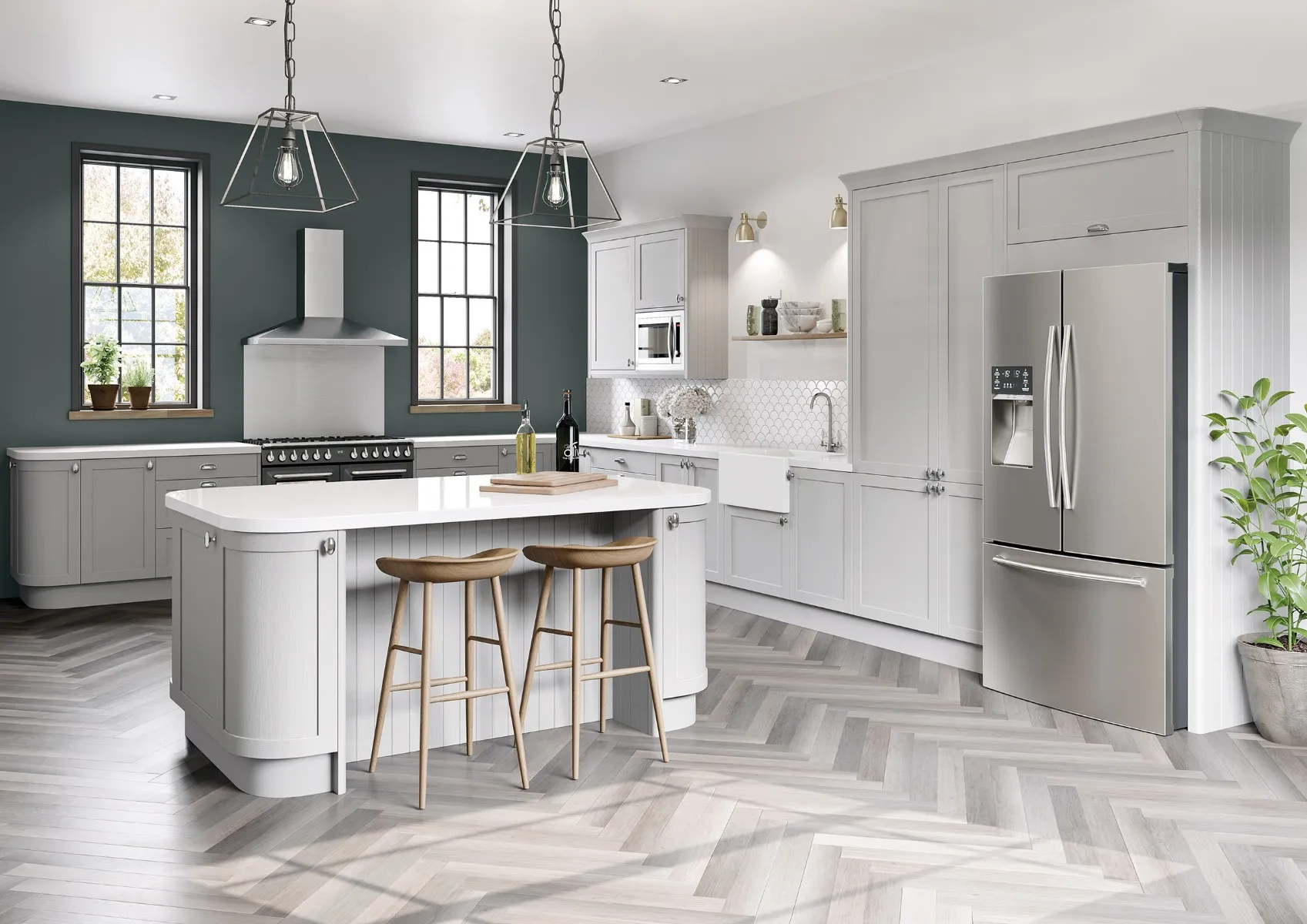
Small but smart: a compact island adds prep space and charm to this classic shaker kitchen.
Kitchen islands earn their place in rooms far smaller than the sprawling open-plan spaces they’re associated with. In a compact galley or a room with space to spare, the key is the same: proportion. At Leith Kitchens, we tailor each design to suit your space, lifestyle and aesthetic, from a simple prep block with a square-edged worktop to a multifunctional statement piece.
Worth saying early: the islands we design are fitted as part of a full kitchen, not supplied as standalone freestanding pieces. That’s what lets us match the cabinetry, run services through to a hob or sink, and set the proportions against the rest of the room rather than guessing at them.
Start With the Room Dimensions
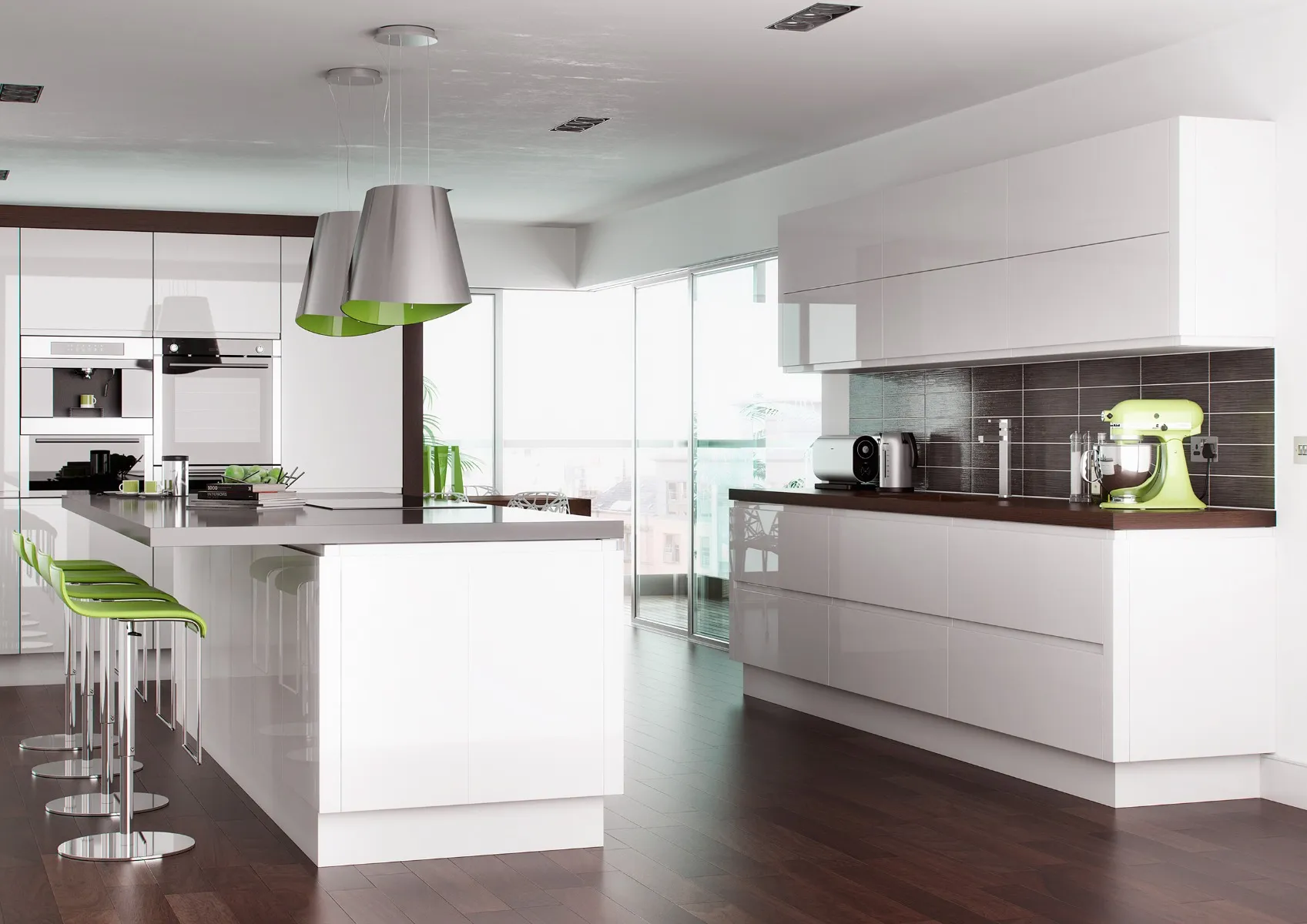 Open-plan layouts can easily accommodate larger islands with integrated features.
Before getting lost in Pinterest boards, measure up. Your designer will look at your kitchen’s footprint and the flow of movement around cabinets, appliances and entryways.
A general rule? You’ll want at least 800mm of clearance around all sides of an island. Treat that as the floor, not the target. Where you actually cook, we plan more generously:
- 800mm is fine for a walkway along a side nobody works at.
- 1000mm to 1100mm suits the working sides, so one cook can stand at the hob or sink while someone else passes behind.
- 1200mm earns its keep wherever an appliance door swings into the route. A dishwasher door open across an 800mm gap closes the kitchen; across 1200mm, people simply walk round it.
Measure the door swings and drawer runs along with the walls. An island that clears every cabinet on paper can still trap you between an open fridge door and a worktop edge, so we walk the room’s routes at the design stage, not after the fit.
Space-Saving Doesn’t Mean Style Sacrifices
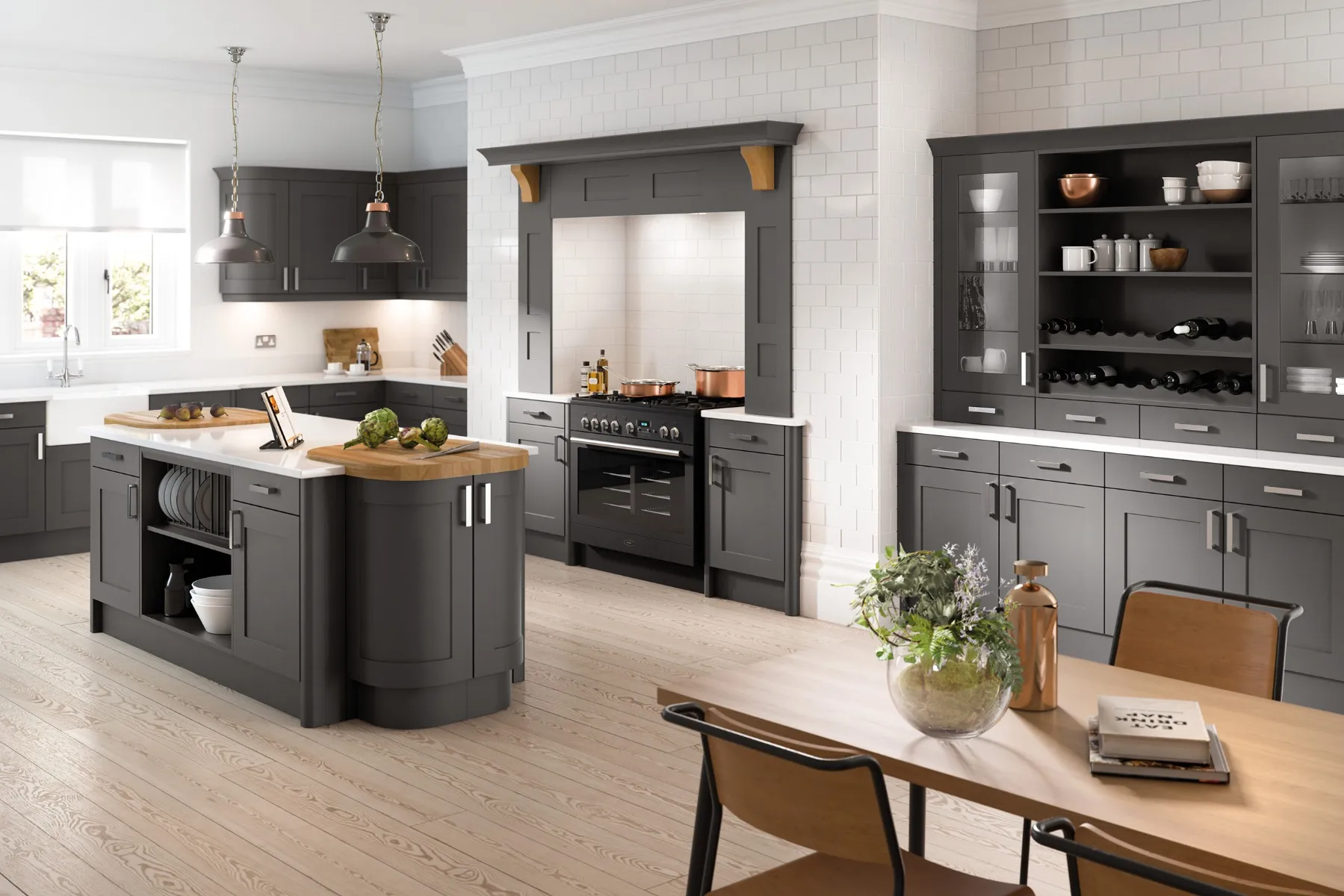 Efficient layouts can still feel open and inviting with the right layout.
Even in compact kitchens, a small island or a peninsula can add valuable prep space, storage or seating. If your space is tight, our designers can work with you to create a layout that keeps things open, safe, and visually balanced.
Kitchen Island Sizes: From Minimum to Statement
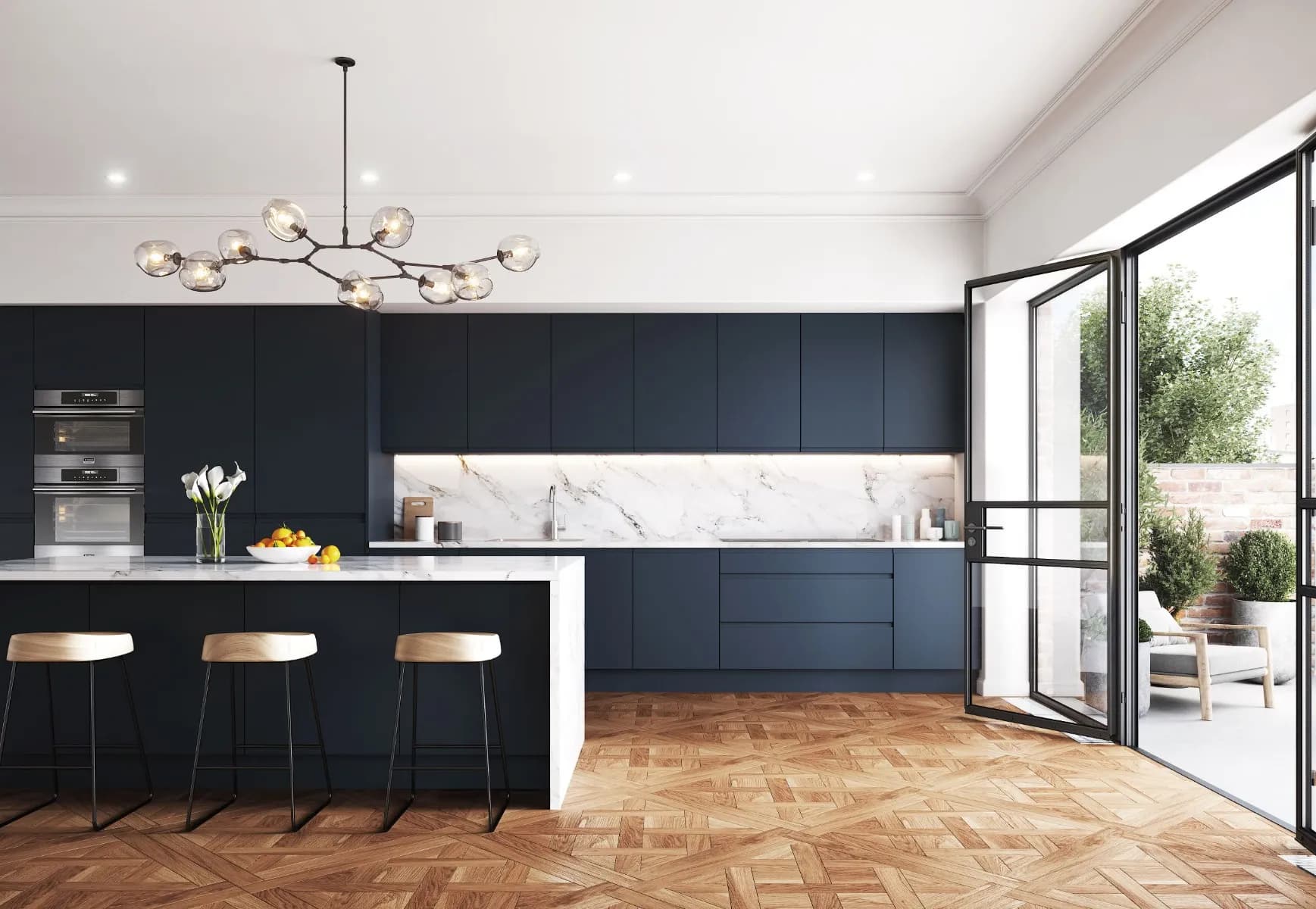 Smaller islands can still pack a punch when designed with care.
As a guide, the smallest practical island size we’d recommend is around 1000mm x 1000mm. This offers enough space for a prep area and maybe some drawer storage. Just note that smaller islands are often best suited to single-cook kitchens, as too many bodies in a tight space can quickly feel crowded.
Beyond that minimum, the islands we design tend to fall into three bands:
- Compact, around 1000mm x 1000mm. A prep surface with a drawer stack below. Honest about its limits, and better than no island at all in the right room.
- The workhorse, roughly 1800mm to 2400mm long by 900mm to 1000mm deep. Long enough for a hob or sink plus wide drawers and bins, with seating on one end or face. Most of the islands we design land here.
- The statement, 2600mm and up. The island in our Clydebank project runs to 2.6 metres with drawers on both faces. Islands this size want a genuinely open room, so run the clearance arithmetic above before you commit to one.
Depth matters as much as length. At 900mm to 1000mm deep, an island can take appliances on one face and seating on the other. Much past 1200mm deep and the centre of the worktop drifts out of reach.
Island Seating: The Numbers Behind a Comfortable Breakfast Bar
Seating is where an island earns its place in family life, and where under-planning shows first. The working numbers:
- 600mm of island face per seat. Two stools need 1200mm; three need 1800mm. Squeeze them closer and elbows meet.
- 250mm to 300mm of knee overhang at standard worktop height. Less than that and people sit side-on with their knees against the panel.
- Stool height follows worktop height. A standard worktop at around 900mm takes a 650mm stool; a raised bar at around 1100mm takes a 750mm bar stool and hides prep clutter from the rest of an open-plan room.
- Room to pull back. Allow about 900mm behind seated diners so a stool can slide out without blocking the route past.
If those numbers do not fit your room, a shorter overhang on a peninsula usually will. More on that below. And if the island is doing the cooking rather than the seating, the seats can live elsewhere: our Glasgow tenement kitchen puts the hob in the island and a leather banquette under the window.
Design With the Room, Not Against It
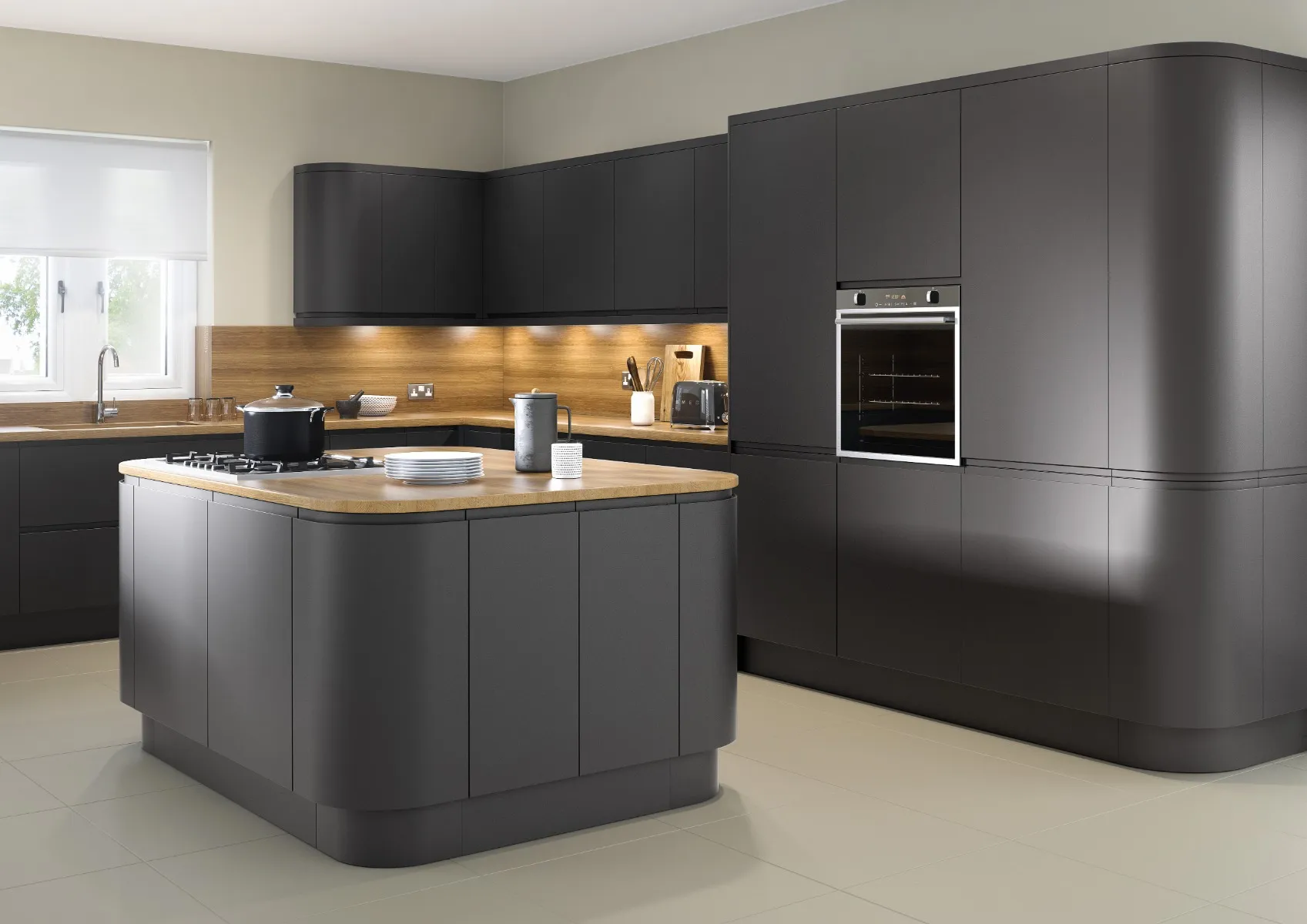 Let the architecture of your room guide your island size, not the other way around.
An oversized island might seem luxurious, but if it overwhelms your space, the whole kitchen suffers. We always aim for harmony: your island should complement the scale, flow and function of the room it lives in. A knocked-through kitchen-diner in a 1930s semi in Bearsden or Giffnock can carry a generous island; the back kitchen of a Southside tenement usually cannot.
Think Beyond Just Prep Space
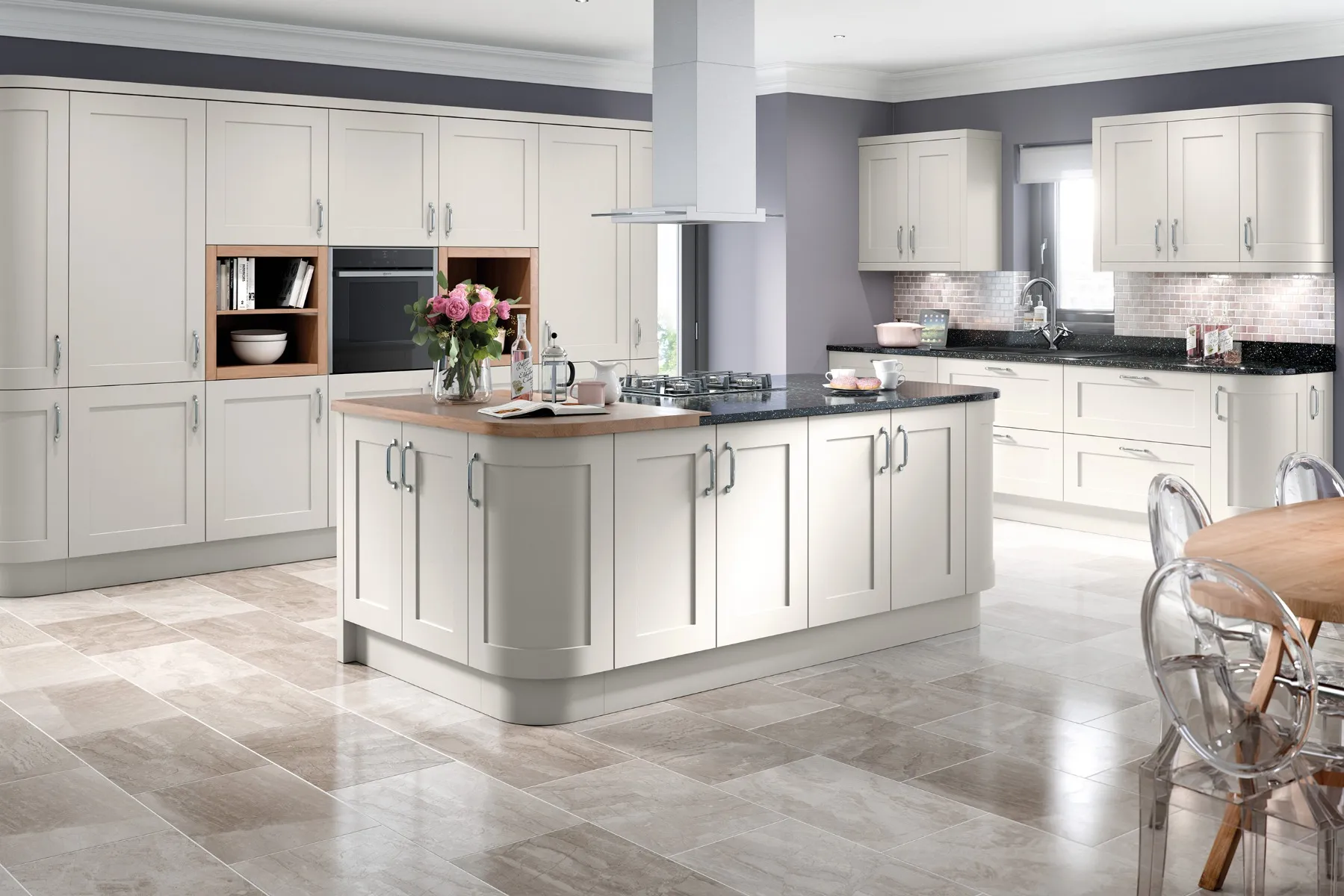 Storage, seating, and workspace: a well-planned island does it all.
Modern kitchen islands are multi-taskers. Think: a built-in hob with integrated extraction, breakfast bar seating, hidden drawers, or even wine fridges. Family dinners that need more elbow room, or clutter with nowhere to go: an island can do more than you think, even when space is tight.
For a real example, our handleless kitchen in Clydebank pairs a 2.6 metre island with wide drawers on both faces, an open end for the cookbooks and breakfast seating facing the garden doors.
An island adds cabinetry, worktop and sometimes services, so it shifts where a project sits within a budget rather than doubling it. Our honest guide to what a new kitchen costs in Glasgow covers where the money actually goes.
Explore more worktop options and storage solutions to make the most of your layout.
Will an Island Fit a Glasgow or Edinburgh Tenement Kitchen?
A huge share of Edinburgh's homes are tenements and Victorian conversions, and Glasgow's West End, Southside and Dennistoun are built from the same sandstone stock. For their kitchens the honest answer is: sometimes. These rooms are long, high and often narrow, with a chimney breast, a window at one end and a door exactly where you might want cabinetry.
The arithmetic is unforgiving. A run of base units is 600mm deep. Add 800mm of clearance, an island at 900mm to 1000mm deep, and 800mm on the far side, and you need a room about 3.2 metres wide before an island between two runs feels comfortable. Many tenement kitchens measure less than that, and former box rooms and sculleries far less.
When the maths says no, it usually says yes to something else:
- A peninsula off the main run delivers the prep space and seating while asking for clearance on one side only.
- In a narrow galley, deeper worktops and full-height storage along one wall often serve better than a token island squeezed to the size of a bar table.
- Where the kitchen opens into the living space, common in Glasgow’s sandstone flats as much as Edinburgh’s tenements, a raised-bar peninsula doubles as the divider between cooking and sofa.
Not sure which side of the line your room falls on? Measure its width, then read what to expect in a design consultation. On a video call with your measurements to hand, this is usually settled in minutes. And if the island question is really a whole-room question, our small kitchen design guide picks up where this section stops.
Consider a Peninsula Instead
 Peninsulas offer island benefits with a smaller footprint.
If you’re tight on space but still want that island feel, a peninsula is a smart alternative. It gives you extra worktop, seating and storage just as an island does, but is fixed to a wall or run of cabinets, saving valuable floor area.
Get in touch
Let’s Design a Kitchen That Fits You Perfectly
Dreaming of a grand island centrepiece, or a compact design packed with function? Our Glasgow designers work with clients in Edinburgh too, and can help you bring it to life. Start with a design consultation and we’ll tailor every detail, island or not, to the way you live and cook.